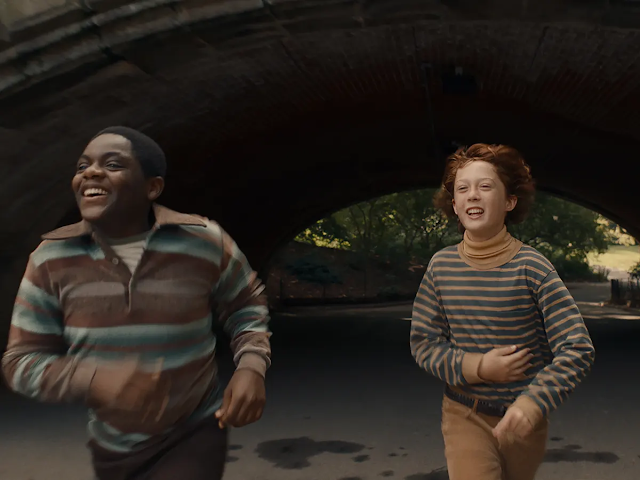
Even when tackling expansive themes or settings, James Gray's films have an intimate sense of contemplation to them--I'm thinking of Two Lovers, The Lost City of Z, The Immigrant, and Ad Astra in particular. His films have drawn praise for their attention to cinematic form, production values, and the sense of serious-minded dedication. Sometimes, however, there's a feeling of something missing--a flatness, a tediousness, and emotional remove. Due to its rich cast, sense of time and place, Armageddon Timeis his best film, or at least the first one of his to get under my skin. It's an imperfect movie, but its moral murkiness--its stirred-up feelings of regret, guilt, anger, and fear--make it palpable. The coming-of- age story is pat on paper--with young Paul Graff (Banks Repeta) as a daydreaming kid in Queens who yearns to be a famous artist. He befriends Johnny Davis (Jaylin Webb) who yearns of being an astronaut. Both kids are goofy, as young kids can be--rambunctious in class--but because Johnny is black, he's punished and treated differently than Paul. These personal situations and the witnessing of malice and racial bias permeate the story against a backdrop of larger American power shifts. Paul is from a brazen, middle class Jewish family. Even if they find Reagan abhorrent and are likely self-described as societally sympathetic and compassionate (Paul's mother Esther, played by Anne Hathaway, at one point utters a shivery and cringe-y "I don't care if your purple, blue..." line that people still invoke), they display biases in a myriad of ways.
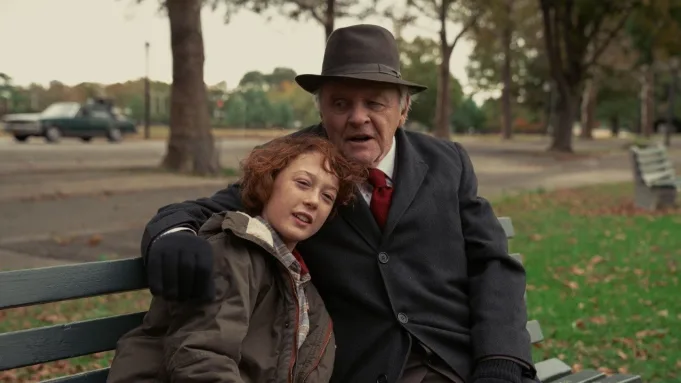
In some aspects, the film is about generational differences, especially between Paul's grandparents and parents of the Getz / Gilebrto set and his male generation drawn to punk (the title is inspired in-part by The Clash) and rap (the roots of which spin on Paul's turntable). It's reminiscent of Barry Levinson's underappreciated Liberty Heights, another trapped-in-amber racial remembrance from a Jewish family perspective. In Heights, a black girl wants to take a Jewish kid to the James Brown concert; in Armageddon Time, Johnny wants Paul to go to the Sugarhill Gang concert. Both directors reflect upon shifts, both regressive and progressive, in America and American popular culture. Ultimately fear is what displaces Paul out of his public school into what is supposed to be a "great" institution--a mostly-white elite private school his older brother attends, ensnarled by the Trump family. The people in this school already know, and are constantly told, they are at the top and that they will continue to be at the top. This fusion of being on the precipice of the Reagan landslide and the harbinger of the Trump era to come, is what comes through strongest in Gray's piece. Filmed in a downbeat, brownish hue by the prolific cinematographer Darius Khondji, the movie has a gripping, haunting feel and look. The ensemble is somewhat uneven in their styles--Jeremy Strong as Paul's father is quite showy. But perhaps the acting is just as uneven as the temperament of any family member would be. Anthony Hopkins, still going strong in his extraordinary career, emerges the most effective and affecting as the grandfather who best engages socially with Paul. In a pivotal scene between him and and his grandson, there's a lecture on white privilege and the complicity of white silence as Paul tries to launch a toy rocket. Reflected here are the smallness of humans in a vast, capitalistic scheme: the hulking husks of the Queens Rocket Park looming in the background against a grey autumnal sky of washed-out space-age optimism. ***
I wasn't dazzled by Dune as a movie (or part of a movie), but I was dazzled by its special effects--a wizardly conjuring of plaintive, nightmarish imagery that leaped between the magnificent and the minutiae.
Just because a movie is primarily about SOUND, doesn't necessarily make it a shoo-in here. But the use of sound is transfixing, surprising, scary, and meditative in Apichatpong Weerasethakul’s film. The scene where Tilda Swinton, almost desperately, tries to explain and recreate the thumping sound she's plagued with hearing with the help of an audio engineer, is particularly my favorite.
As in Julia Ducournau's other film Raw, the make-up and prosthetic work hits a nerve as well in Titane, so to speak, and digs into the film's feverish thematic and visual ferocity.
Wes Anderson movies are usually all about the aesthetic, and it's difficult, as much as I found this particular film itself somewhat uneven, not to be awestruck by the movement and vitality of the sets and backdrops.
Felt a little underwhelmed by original song choices this year, the twinkly fleeting title song ditty performed by Suzanne Lindon, remarkably also the film's director, writer and actress, was a surprising hit of melancholy.
Once I heard that tumbling piano motif trying to break out and also going in circles, much like the film's central character, I was totally slung into the movie. Later, the motif takes on new dimensions. The score also features distressed jazz and gothic organs. Another dazzling effort from Jonny Greenwood.
While Florian Zeller's source material offers a lot of richness and ambiguity, The Father doesn't really work as a film without the cryptic nature of Lamprinos' editing which brings us into a chilling state of mind, even when we are trapped in limited spaces and rooms.
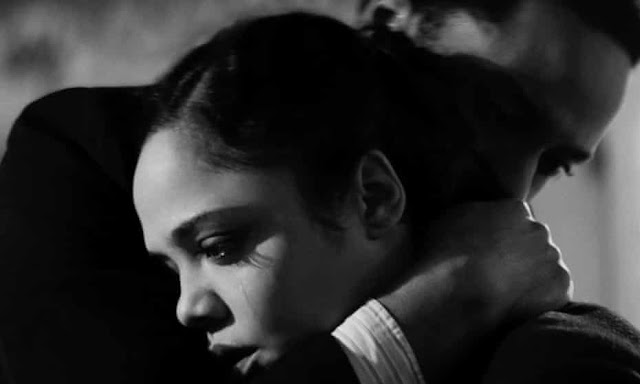
There were quite a few notable movies this year shot in black and white, but Grau's work on Passing is particularly sublime--both in its visual beauty and its thematic underpinnings.
Few films felt as ALIVE this year as Questlove's doc as it mines and seamlessly assembles rousing concert footage from the 1969 Harlem Cultural Festival.
"The fragmentation of it is what’s fun to me. You can be in the moments. I always imagine a movie is a record with different songs on it, and I want it to only be hits — as you always do. We are trying to ride the structure of the scenes, rather than just create a plot." -Joachim Trier
"Writing the Passing script felt like working out the movie. The longer I spent with it, the more the vision, the images, even the sound design, began to be clear in my head — like how quiet it needed to be. It was always a tricky book to adapt, because it’s incredibly subtle and incredibly ambiguous. I wanted to keep that ambiguity alive. I didn’t want to signal anything too strongly. But I also wanted to leave an audience with a lot of possible interpretations." -Hall
"Since we wrote it for Renate, she contributed quite a lot. We showed her an early draft and she provided feedback. It’s a delicate thing to talk about these days. We’re having very valuable conversations that we must have about ideas of gender and representation in art. I have to say that I’ve written men and women before — old and young people who are quite different from me — but I believe as an artist that’s my duty: to try to be truthful and, from myself, try and find a way to understand someone that is not myself, which is the character. The dialog you have between actors and collaborators, that’s the place where we explore something together and question things. It’s not like I’m sitting on a high horse pretending to know the answer. I wanted to tell this story. I always feel that I am all of the characters and I am none of the characters. It was fun because I loved Julie as a character. She means a lot to me." -Trier
The mixing of non-professionals and professionals works wonders once again in a Sean Baker movie. The vivid cast and the way they play off one another really ignites Red Rocket.
This is the second win here in this category from a Sean Baker picture, the other being Tangerine.
"...art and culture is like our collective memory, and that will remain after we're gone. I think on a more personal level of the character, the speech is also realization that all you have left as you grow older is the memories and memories of past experiences. All the things that you have been through in your life is ultimately what remains and that constitutes your identity, who you are. It's almost as if it's impossible to understand yourself if you don't have any memories, any stories about your life. There's a melancholy of the passage of time in the character. In this film, I think it's a recurrent theme in the Oslo trilogy and in Joachim Trier's movies. The monologue or the speech in the script, you never really know when you shoot the movie, what ends up being focused, thematic representation of something." -Anders Danielsen Lie
While Mass functions as an ensemble chamber drama, Martha Plimpton's singular, devasating performance stuck with me all throughout the year--its ache and torment, the spoken and the unspoken. It's also exciting see such a talented actor I've loved for decades get a great part to work with.
"She’s very tightly wound and balled up. She knows what has to happen and that she’s supposed to do something, do these things, say these words, but as she says in the film “I just don’t know if I can say it.” She’s in a battle with herself, and when it pours forth from her, it surprises her as much as anyone else. I don’t think she can even envisage saying the words until they are actually coming out of her mouth. And I think that’s the nature of that kind of experience, although I certainly never had anything near the experience that Gail is having. That’s what so hard for us as human beings, because we think of forgiveness or redemption or grace as some sort of achievement that we come to after doing all of this hard work, when actually it’s a process, and there’s an ebb and flow to it. It’s the opening of the door rather than the closing of it. That’s why I think “closure” is such a silly concept." -Plimpton
“I just looked around the set... I saw on the nightstand a pair of glasses I wore, a book and the photograph of the two daughters. And it suddenly hit me, just in that moment, about the transitoriness of life, the fragility of life. All our little possessions, our glasses, our little things: when you’re dead, you’re gone forever and they are the stagnant last remains. And then they’re scrapped or sold or rot away somewhere in a cupboard and you think ‘that’s life'. It hit me so profoundly. We can’t prove the past exists. I can’t prove to you my mother and father ever existed; we have photographs, but did they really exist? Time is so peculiar.” -Hopkins
Extraordinary directing on a tight, tense picture. The final moments are haunting.
"The financing period was very difficult. Everyone said people don’t want to watch a film about genocide. And for a female filmmaker in the Balkans, where societies are still very patriarchal, it is ten times harder to position yourself to make a film. So, when the film premiered and the audience was in tears, I was surprised and beyond happy. It is great to see that audiences love films with difficult subjects as well." -Žbanić
Darren Aronofsky's films always portray tormented souls. Noahstarring Russell Crowe, is no different. What was always a whimsical Sunday school story, turns out to be a dark, disturbing tale about human nature, survival and our darkest thoughts toward ourselves and the rest of mankind.
While the film is set in the time of Genesis in the bible, the movie is current in its depiction of an overpopulated, crime-ridden and sick world. Though inspired by the biblical story, Aronofsky’s adaptation has less to do with God’s wrath than it does with our desire to find peace in a less-than-perfect world. I’ve certainly felt dark thoughts creep into my heart while riding an overcrowded 6 train through the city. This movie, while portraying a bygone era is relevant in how we relate to each other as humans today. The “every man for himself” attitude is heavily played out in this story.
Noah is tormented by striking visions of great masses of water and eventually ponders what the “Creator” might be trying to tell him. Noah travels to visit his father, the wise Methuselah, played by Anthony Hopkins, to find the answers to his persistent nightmares. He takes his family on an epic journey across the lands of the fallen angels, to find Methuselah. At his side is his reluctant, yet loyal wife Naameh, played by Jennifer Connelly and their two sons Ham, played by Logan Lerman of Perks of Being a Wallflower and Shem played by English actor, Douglas Booth.
There are moments where the movie made me feel like I was watching a cross between Transformers and The Neverending Story. The endless CGI sequences and the portrayal of the fallen angels known as "The Watchers" were more laughable than dark and moving to me. I felt, considering the subject matter, that "The Watchers" were a lost opportunity to really bring forth the crises we face as humans in just the smallest moments of our daily lives, when we struggle with what is right and wrong.
Methuselah’s character is quirky and comedic. Played against the gritty, serious Noah, the chemistry between Crowe and Hopkins just does not work. Methuselah ends up reminding me of a Star Wars type character, maybe even a Hopkins-like Yoda, with his hunched performance, skittish childlike banter and his endless search for "red berries."
Emma Watson in the role of Ila does not do a bad job of playing the young girl rescued by Noah and his family after her village was destroyed by pillagers. She grows to be loved by Shem but is barren due to an act of violence and is tormented by the fact that she will not be able to repopulate the earth. She begs Shem to find another wife, despite her love for him. Ham, who is plagued by his need to find a wife and companion before the storm comes, is moody throughout the film. In the later scenes his resentment for his father leads him to a revengeful plot against him.
The scenes of the animals entering the ark and the epic storm sequences are all CGI, and they feel just as fake. I did not feel emotionally attached to any of the characters, except maybe the twins born to Ila (after a magical blessing from Methuselah in the forest).
I felt like the film tried to accomplish too much and so all we ended up with was another really long movie. I was exhausted by the trials and tribulations of Noah and his family, his growing resentment to his family and fellow man and his unshakable “calling” to serve the Lord - at any and all costs. I was even disappointed by Clint Mansell’s score that felt disconnected and unfaithful to the story and characters.
I will hand it to Aronofsky for always giving us the unconventional and the film certainly leaves you with a deep sense of discomfort, as all his past work does. The movie is definitely original in its structure and subject matter as it is thrown into a biblical setting, but we can definitely all relate to the feeling of being trapped. The ark is the perfect metaphor for our search for enlightenment and truth while sometimes feeling confined, and in the dark, even when we are surrounded by the ones we love.
I’m an expert on Psycho. I’m not bragging; it’s just a fact. It’s one of my all time favorites, and besides having seen it probably a hundred times, I’ve read practically all there is to find on its making. So I was obviously intrigued to see Hitchcock, starring Anthony Hopkins and Helen Mirren and based on Stephen Rebello’s Alfred Hitchcock and the Making of Psycho. After the film, my boyfriend asked, “What about it was inaccurate?” “What wasn’t inaccurate?” I quipped. Putting aside the whole wife crushes on screenwriter plot, which I’ve heard is utter hogwash, here are the inaccuracies that plagued this movie:
Ed Gein—A highlight of the film for me was its depiction of Ed Gein (Michael Wincott), the real life necrophile who inspired Norman Bates. The role was well cast and the scenes of his home and bizarre crimes were excellently staged. But Hitchcock wrongly says that he “dug up his own mother,” and the scene of Ed cozying up to his mom’s corpse in bed is total fabrication. Gein told authorities he tried to dig up his late mother’s grave but couldn’t break through. He’s also shown in the basement of his house when the cops arrive to arrest him, but he was actually dining at a neighbor’s when his victims were discovered.
The shower scene—In Hitchcock, the director loses it during the filming of the shower scene and slashes wildly at Janet Leigh (Scarlett Johansson). It’s a great way to dramatize Hitch’s mental state, but Leigh is obviously frightened in the sequence, and the incident never happened.
Raising their right hands—Vera Miles was quoted as saying that “We all had to raise our right hands and promise not to divulge one word of the story.” She has a way with words, but the scene of Hitchcock literally instructing his cast and crew to raise their right hands and recite an oath is pretty ridiculous.
Tony Perkins—While Perkins did, as he hints in Hitchcock, have an unusually close relationship with his mother and lost his father at a young age, he was nothing like the shy mama’s boy he played in Psycho, and James D’Arcy’s strained, Batesian performance does him a real disservice.
Joseph Stefano—The idea that Stefano landed the screenwriting gig because he was in therapy and had issues with his mother is cute but disingenuous. Stefano was in therapy, and Hitchcock asked him about it, but Stefano got the job because Hitch liked his take on the opening scene, which he said “Alma loved.”
Alma takes over—Alma Reville was not only Hitchcock’s wife but also his closest and most trusted collaborator, and the movie is a fitting tribute to that. Still, the idea that she came in and directed while Hitch was laid up in bed (after the bogus “shower scene incident”) is pure invention. In reality, no one directed but Hitch, and pictorial consultant Saul Bass’ contention that he shot the shower scene has been repeatedly rebuked by sources including Janet Leigh herself.