Before my viewing of Ben Affleck's Air, there were a fleet of previews of forthcoming movies--all based upon brands (Fast X, Transformers: Rise of the Beasts, The Flash, Indiana Jones and The Dial of Destiny). In fact, the weekend Air landed, Super Mario Brothers made over 200 million dollars in its debut weekend, a staggering gross. Brands are inescapable and so intrinsic to the American story, that it seems it have almost fully permeated the content of the movie industry as well, even mid-budget adult dramas.

Brands and branding are the main thematic and plot thrusts of Air, which was funded by Amazon. Set to Dire Straits' evocative 1985 rock epic "Money for Nothing," the movie's opening sweeps through grainy footage of early 80s Americana from Ghostbusters to Mr. T to Reagan. Figures and enterprises are reduced to commercial slogans, toys, dolls, images plastered on cereal boxes. Like the Dire Straits song and another woeful 80s American song that features here prominently, there is a sense of simmering cynicism to this plethora of capitalistic desires woven explicitly into Affleck's film, but also nostalgia and tuneful, anthemic celebration.
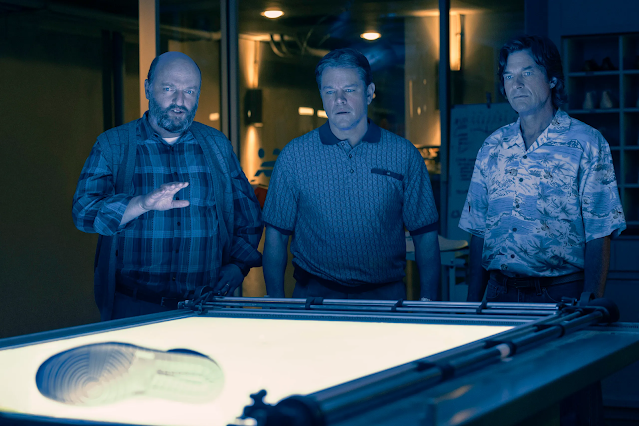
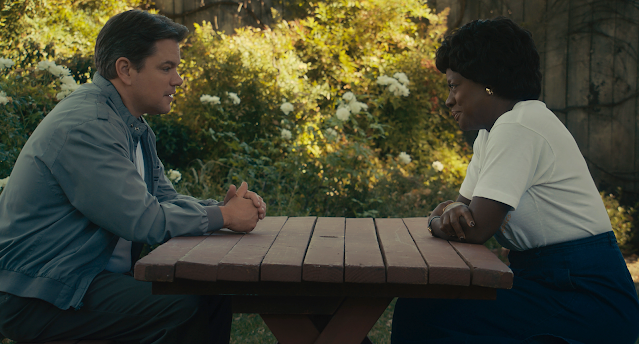
Matt Damon's Sonny Vaccaro, works at Nike, a company stuck in third place (the UBS, the lowest rated newscast in Network, of shoes) behind fellow popular sports sneaker giants Adidas and Converse. With strong belief, he picks then-newcomer Michael Jordan as the sole (no pun intended) figure to sponsor their latest sneaker. Sonny's a bit at odds with his kooky co-workers--aging, shaggy-haired Rob Strasser (Jason Bateman), unconventional CEO Phil Knight (played by Affleck, unfortunately the least engaging performance in a powerhouse cast), Jordan's fast-talking, mouthy agent (Chris Messina), and even Jordan's steadfast mother Deloris (Viola Davis, as usual, excellent), who really runs the show in the end. Most will be aware of what eventually happens, but how the idea, the deal, and even the shoe itself happens (Matthew Maher gives a quirky, intriguing turn as the shoe's designer Peter Moore), is captured smoothly and satisfyingly by Affleck's crew and cast. He's indebted to the enigmatic actors and also the longtime skills of editor William Goldenberg (who cut Affleck's Argo with admittedly crackerjack precision despite the faults of that movie) and cinematographer Robert Richardson (in one of his more playfully-lensed films enhancing the mostly dull office settings).
It's a bizarre movie in a way, with its atmospheric, yearning soundscapes of mood music (Pino Donaggio, Cyndi Lauper, and Harold Faltermeyer's "Axel F" all surface) that suddenly fade in and out, sometimes of the film's 1984 setting, sometimes just a year or so off, or bizarrely, even a cue from Mark Isham's score from Suffragette (a 2015 film). The movie is also an old-fashioned brand of American storytelling that easily fires up its audience about the thinly-characterized risktaker who is so thoroughly obsessed with his risk, that his success in the end--against the "out-of-touch," and especially with the case of Adidas, "less American" (and feminized) competition. In fact its the template of last year's mega success of another slick story rooted in 80s nostalgia--Top Gun: Maverick.
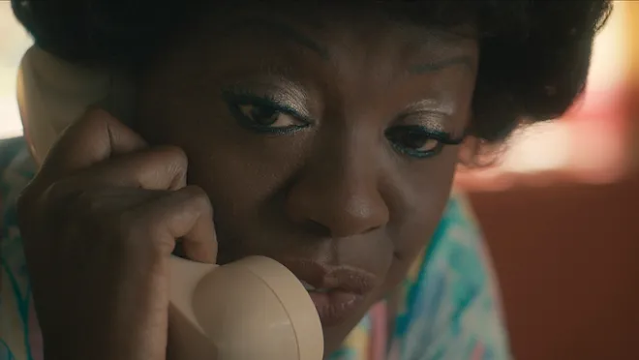
This is all such an interesting contrast to Affleck and Damon's first big collaboration, 1997's Good Will Hunting--that scrappy underdog tale, filmed with a mix of a golden-hued Hollywood glow and a sense of gritty realism of Gus Van Sant's direction, and populated with melancholy Elliot Smith tunes. The rambling uncertainty of that film's moving ending is part of its evocativeness (that car over the road over the end credits!). Interestingly in the same year, Michael Moore's The Big One, probed American corporations, including Phil Knight's use of sweatshops in Indonesia. Air may not seem interesting on paper, but it is a curious pivot to substance through the lens of an almost fetishistic view of capitalism from a team of plucky Gen Xers. The notion of white men as opportunists battling over the fate of a black man's body is nothing new, and is rendered in this film more perceptively than expected, opening this film up to deeper discussion. Davis's Deloris, authentically realized in a quiet, understated way, gets the last word, so to speak, in Alex Convery's punchy script, a phone monologue delivered so expertly and crisply, that it becomes an extremely moving moment, and emblematic of greater meanings of commerce, talent, and ownership. ***
-Jeffery Berg


