
Lovely tune and music video from Shrines.
Video Directed by Brody Bernheisel
Video Produced by Joel Inchaustegui
Cinematography by Noah Fowler
Choreography by Georgia Usborne
Featuring Dancers:
Quinn Dixon
Mio Ishikawa
Dasol Kim
Georgia Usborne
Lovely tune and music video from Shrines.

Social climbing, backstabbing and lies--these are aspects inherent in many a story, but few authors have distilled this chaos as urbanely and meaningfully as Honoré de Balzac. Pithy quotes from his work continue to abound as observant gospel. The task of capturing Balzac's work cinematically must be both arduous and precise. Xavier Giannoli's nimble and smashing adaptation of Lost Illusions, written and published between 1837 and 1843, captures both Balzac's grandeur and specificity. The story of a poet moving from the provinces to Paris, and becoming entangled into the treachery of publishing and social worlds, is ravishingly well-executed by Giannoli and team. At its core, Lost Illusions is a coming-of-age tale, a hero's journey, but it also feels a bit like a mafia picture of sardonic nefariousness, where the side who can pay the most for artificial, mechanicalized applause, rules the night.
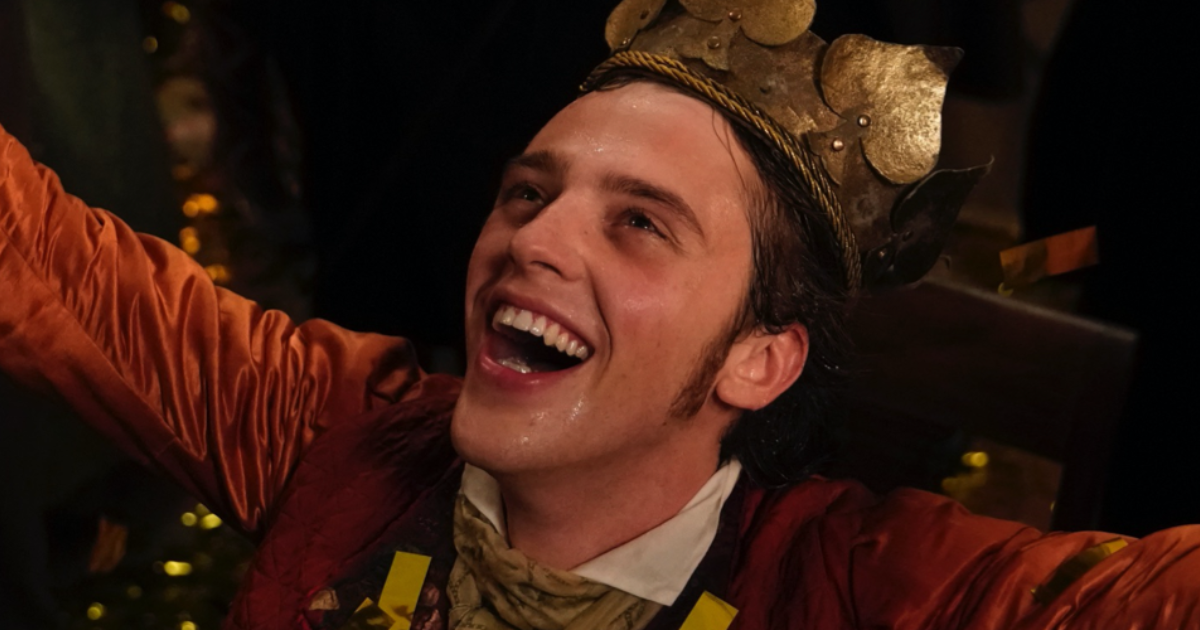
The yearning and searching character of Lucien, played by Benjamin Voisin, changes over the course of the film due to the circumstances around him and the characters, many of them vociferous, whom he interacts with. Handsome, slender and lanky, almost blank-faced, Voisin visually has sort of an unmarked quality that blends between the dreamy poet and the unflinching schemer. His work is helped in part by the magnificent costumes by Pierre-Jean Larroque's costumes which portray Lucien as blue-suited dandy to his raw unraveling towards the end. Lucien succeeds and sometimes falls flat, but he is continuously a wannabe thrown in the circumstances of survival in a society inherently devious and rotten.

The film version of Lost Illusions reaps the tropes of classic literature--coincidences (those chance meetings) and heavy symbolism (spilled ink and wild animals)--but still feels fresh: the mentions of "fake news," the divide between "truth" and freedom of press and expression and governmental control, the fissions between art and commerce, the societal concerns of upward mobility, money and fashion, are all still, of course, pertinent to the concerns modern audiences across the globe. As are the basic facets of cruelty and love (Lucien's ongoing affair with a good-hearted older woman, Louise, played sweetly and quietly, but also assertively, by Cécile de France is a piercing relationship).

Although lengthy and stuffed with detail, Lost Illusions flits by and really moves along (in one scene, the camera pans room after room of Lucien's newfound decadence: the sort of visual pomp that can be an irresistible aspect of 1800s French period pieces). The forward-feel hurtling is aided too by Vivaldi violin allegros that some may find excessive, but in a tale that wades into the folly and pleasure of excessiveness, I found just right. Voiceover helps patch-over plot points, but also adds to the film's importance of storytelling (a very good, well-cast Xavier Dolan, a side-eye master, emerges as Lucien's literary foe) that mimics the serial nature of Balzac's publications. Also strong in a supporting role is Vincent Lacoste whose Etienne ensnarls Lucien into the world of the newspaper he works for. Etienne uses Lucien's gift with language to publish hot-tempered parodies of the ruling class (including Louise's husband) simply because "controversy sells." These particular men could have easily have been boxed into caricature but they are ultimately complicated figures that complicate Lucien's life and decisions--due to Balzac's source material and the script's rendering by Giannoli and Jacques Fieschi with collaboration by Yves Stavrides. This could have been adapted into a cushy miniseries, but there was something so delightful about taking this in as film, with its briskness and richness, and quick pang of an ending. ***1/2
-Jeffery Berg

.png)
.png)
Through the guises of film and radio, these fussy electronic (sometimes tinny and harsh, sometimes swelling and romantic) and visual embellishments, including ratio-switching and juxtapositions, are all part of The Dream and the Radio's fabric and fortitude in its decadent runtime. The film, and its characters, resist tech but also depend upon it (a product of "institutions" and "daily absurdity") to get their messages out there. Even speaking of people as a "great force of resistance" sounds like describing humans scientifically or through tech vernacular. The trio are filmed in golden yet shadowy picturesqueness in their flat. They express their disillusionments, their dreams, their desires and the film itself mimics their inner and outwardly yearnings. The movie cuts to pretty and unpretty images with voiceovers. Sometimes these interludes feel like intermission cards from 1950s technicolor movies: bombastic orchestral music with grandiose horns by Olivier Messiaen may play over a picture of a burnt orange sky. There are the sounds of a police inquiry overlaid with an image of a glistening moonlit bay that cuts to quartered images of surveillance. The film wants to "ground itself" like an adult but also wants to soar playfully like a child. The disillusionment of growing up for these characters, and perhaps by their players, is only quelled by the importance of creating things; full of zeal and fervor, it's a languidly-paced film celebratory in its sense of collaboration and in its ticking unease. ***
-Jeffery Berg
.png)

One night, David Cronenberg's Crimes of the Future ended up infecting my dreams. The next day, the dream was a muddle, but the remnants of its atmosphere and nightmarish corporeal images remained. Cronenberg's film delves into many intriguing, smart ideas: humans evolving to a plane of painlessness, needing new forms of pleasure (one doesn't even know how to do "the old sex" anymore), and also adapting to the plastic environment around them (doesn't it feel like, in some respects, we are all headed there?). One usually thinks of Cronenberg movies with a lot of flair and panache, which this one has, but it is also interestingly more like a play: very talky and mostly set in small spaces. His actors, too, are blocked in bizarre ways--why is this one standing where they are standing? Or awkwardly hunched over against the wall? It's as if the very sense of natural human positioning is off-kilter. In these environs, the premise of a performance artist couple--Caprice (Léa Seydoux) and Saul (Viggo Mortensen)--making art out of organs--is a clever one, and also a plausible one in an avant-garde field that pushes the boundaries of craft and exhibition. Like ventricles, there are side plots of characters drawn to Caprice and Saul for different reasons: a scruffy father (Scott Speedman) using his deceased son for experimentation and spectacle and a peculiar bureaucratic medical pair (played by Yorgos Pirpassopoulos and Kristen Stewart). All seem to be linked in the idea of pushing things and bodies to its limits--almost addled, drug-like states, fueled by the next.

The setting that would typically be cinematically associated with this newness and next-ness would be sleek and shiny. But Cronenberg's world here is the polar opposite: gritty, relentlessly grim, shabby old buildings, sometimes riddled with twisted strains of graffiti, and peeling interiors. It's as if the people of this world are so within their own bodies or within the bodies of others, that they could care less of the physical worlds around them. The premise, the dark optics, squishy make-up and visual effects, Howard Shore's gothic electro score and Seydoux's enigmatic performance are the standouts of Cronenberg's film. Through its oft loquacious characters, sometimes the movie talks too much--and says too much--about what it's about, rather than dwelling quietly in its mysterious shadows. Mortensen is a Cronenberg muse of sorts, but his showiness can be distracting, especially against Seydoux's ravishing sense of naturalism. The actorly tics of Stewart work well however, since Stewart's character, Timlin (quite a name--that feels like quirky mix of the words intimate, intimidated and timid) who desires after Saul, is a strong contrast to Caprice. Even if the film, on first viewing, doesn't quite coalesce as powerfully nor potently as it seems to strive to be, it's always a pleasure to be unnerved by what Cronenberg concocts, especially in the vein of morbid science fiction. **1/2
-Jeffery Berg
.jpg)
Dreamy new tune from L.A.-based artist Emma Ayz.
Speaking of the track, Ayz says, I was listening to a lot of Ella Fitzgerald. So many of her songs are vocals and beautiful instrumentals, just classically pretty... There’s no live orchestra on the track. It’s insane how you can make it sound so real with a MIDI and orchestra samples.
The music video is directed by Tess Lafia.

It's been a while! Here's a big new single from the Yeah Yeah Yeahs featuring Perfume Genius.


