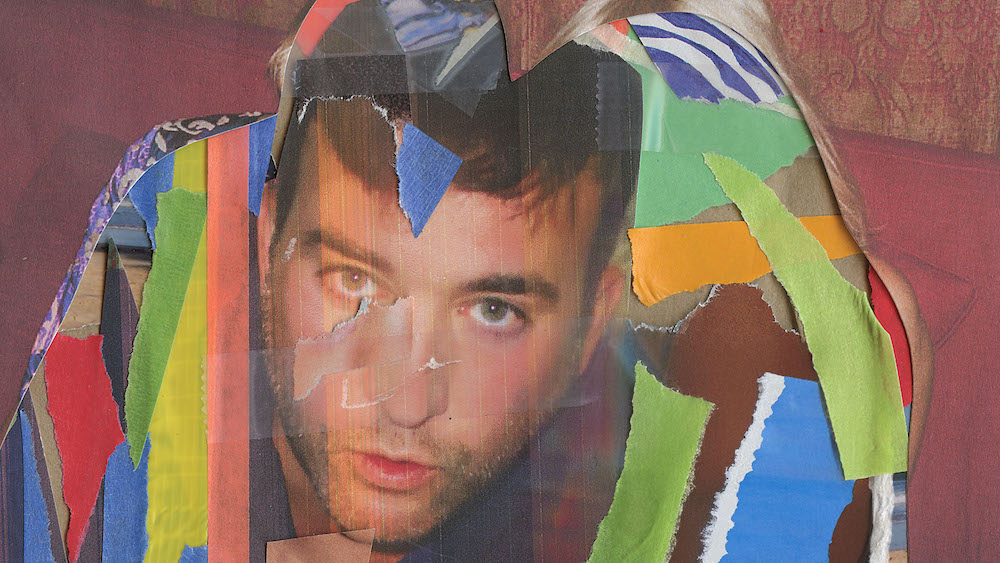
My review of May December is up at Film-Forward.
I really enjoyed it and am looking for to re-exploring its intricacies again.
I really enjoyed it and am looking for to re-exploring its intricacies again.

My review of the very interesting Raoul Peck documentary Silver Dollar Road is now up at Film-Forward. It's a story of the fragility of Black landownership on a waterfront property in North Carolina. It may take a couple of views to grasp the intricate details, but the overriding injustices in the doc are eye-opening.

Steve McQueen's films often employ a sense of the familiar and the traditional while broaching harrowing stories, filling frames with visual flair. Recently, Lovers Rock, an extraordinary cinematic piece of music, dance, sound, imagery, emerged as a small, yet impactful strand of Black West Indian experience in the United Kingdom around 1980 within his Small Axe opus. McQueen's latest is a swerve in another direction, but still deeply invested in specificity and the historical--a seemingly daunting documentary piece at an over 4-hour runtime that intertwines the COVID-19 pandemic with the reverberations of the Holocaust. It's a disarming picture at first, but once the rhythms are established, it becomes mesmerizing. Shot on film, with rich compositions by cinematographer Lennert Hillege, the movie wanders through Amsterdam, with even-toned narration from Melanie Hyams reading sections of Bianca Stigler's (Three Minutes: A Lengthening) Atlas of an Occupied City, Amsterdam 1940-1945. With stylistic shades of Alain Resnais's Night and Fog, the film roams rooms, buildings, city squares and a milieu of other settings in the "present day" (though now, a very specific "past" of early 2020 into 2021) where previous atrocities occurred during the Nazi occupation of Amsterdam. Though inviting of comparisons, the film is a parallel running of two different, yet significant histories within a specific place. In some ways, it might be one of the most significant filmic examinations of the pandemic yet. Visually, we witness the changing of the seasons and also the changing of the pandemic, from the wintry lockdowns of paranoid masked pedestrians, curfews and shuttered stores to the hopeful springs of gatherings and vaccinations, while listening to Hyams read veritable passages of history. Many sites where atrocities occurred where changed, built-over, or dryly noted as "demolished." The pandemic just happened to fall in the midst of filming, but what is ultimately captured within this picture's many frames is a fascinating orb, filled with juxtapositions of time and space and bodies (we see the very young--children going up and down the sides of snowy, icy hills and also, the old, doing small group strengthening exercises).

-Jeffery Berg

Occasionally a film feels otherworldly, cosmic, almost too celestial (and also, directly personal) to critique. Unlike his other, more natural, reserved works, Andrew Haigh's All of Us Strangers announces itself boldly, beginning with swelling music and a glowing burst of light (the sun, moon, and the stars emerge in this movie as more than just ornamental window dressing). It sets Adam (Andrew Scott) high up in his glass tower (the skyscraper sort that seem to be always sprouting like silvered weeds on the edges of major metropolises with sleek, flavorless, ticky tacky tech and design). The skyline view of London is so vast and so distant from the city that it's inscrutable--an urban-appearing building above little of interest--and seemingly sparsely populated, with new tenants to come.

Adam is working on a script of his childhood. He's rummaging a plastic container under the bed of photos and items from his past, including a symbolic angel tree-topper, whilst playing late 80s Top of the Pops. A coquettish younger neighbor--the mustached, drunken Harry (Paul Mescal)--comes up to his apartment and hits on him late one night, but Adam ultimately rebuffs him.

Meanwhile back in London, Adam begins a relationship with Harry of late night conversation, club-going and really good sex, that seems to enliven Adam and also deepen his comfort with his own sexuality. The sex scenes express a sensuality and carnality that's pertinent to the story, and also the sort of agitated weirdness of Adam's predicament--his body and traumatic perspective as he navigates past and present. He "comes out" to his parents, as he revisits them repeatedly at their house on their separate plane of actuality.
The film presents his parents' otherworld matter-of-factly, as the best cinematic ghost tales do, whether they are comic, horror, or dramatic. Sometimes the film suddenly veers dreamlike into the surreal: less so with imagery, but more with the movie's preeminent sound design that pitches, swerves and drops out in occasional flourishes. Overall, a sincere, straightforward approach allows the film to build emotional punches. I found myself not crying in the heat of swelling impassioned moments, but in nondescript spaces afterward, as if emotions were catching up with me or I with them--a sensation with film I'm not usually accustomed to.

There are very good, quietly searing performances, with Scott's beautiful, aching turn at the helm. He has an emotional, knotty quality that behooves Adam. Mescal, so affecting last year in Aftersun, is different here, but could also be that character's kin (it seems fitting to see Mescal caught once again in strobe light). But the through-the-years familiar Foy and Bell are a bit of more of a gamble casting-wise that end up surprisingly working so well. Foy is an actress masterful at observing others, and those busy, searching eyes add to incredible tension, humor and sadness of the coming out scene and also a brilliant centerpiece Christmas tree trimming backed by the Pet Shop Boys' rendition of "Always on My Mind" (that duende 80s mix of hi-NRG upbeat with the deeply regretful). When Mum probes Adam on his loneliness of being gay (a commonly reported worry / slight from parents in coming out experiences), it's to this film and story's immense credit that Adam is portrayed as indeed lonely, and to Foy's that she plays the moment so ambivalently without a warm sense of closure. You don't want these two characters played by people who feel too actorly or too glossy, and somehow Foy and Bell communicate a relaxed organic-ness (and a heartbreaking, wound-up tightness in their characters' awareness of their deaths).
In curious, disarming ways, All of Us Strangers inverts and fuses the two main tropes of queer cinema: the coming-of-age tale and the love story. While the elements here aren't always entirely slam-dunk successful, the rough-hewn risk-taking, the piercing emotions of the film are electric. For such tricky terrain, Haigh's direction and writing feels so remarkably at ease. Jonathan Alberts' editing carries the film smoothly. The ending, employing a booming love song and the film's cosmic light motifs, seems to burn through the screen; it isn't trite nor cheesy, but almost emotionally overwhelming (and exciting!) in its eeriness and simplicity. To the stranger who picked the very last person in the standby line to give their unneeded, extra ticket to, thank you. ****
-Jeffery Berg
My interview with Andrew Haigh in the wake of Weekend, now 12 years-old. A stunning film, but fascinating and heartening to see how much his work has continued to evolve since then.

Ryan Schafer and Ian Tripp's cheeky, irreverent Everybody Dies by the End is an interesting fusion of mockumentary, found footage and the fictional snuff film of horror lore. The beginning--a retro-tinged Charlie Rose-esque talk show with play-it-unwaveringly-straight Bill Oberst Jr. as host interviewing wily, bloviating horror filmmaker, Alfred Costella (Vinny Curran, to his credit, he is doing so much that he often feels like he's also the director of this whole movie)--sets the tone, and also gages how patient one will be with what's to come (very shouty, see-sawing, and farcical). The movie settles in rhythm, with a making-of-horror-movie within, set in a ramshackle, desert atmosphere, with Costella swirling cultish energy out of his frenzied skeleton crew (all decked in matching red Hawaiian shirts)--berating them, or pumping them up whenever they feed his ego.

The creators, scrappy cast and crew punch out a version of what must be momentous pressures of indie filmmaking with a spirited attitude through the lens of horror. Much credit should be given to the editors Tripp and Joshua Wyble, who help move things along, cleverly (and "invisibly") cutting within scenes and also between set-ups and mock interviews. The film has a fantastic idea at the core (including the lengths one goes to for "practical effects"), but the broad comic sweeps consistently miss and become exhausting to behold. I could imagine a compelling avenue for a remake: If enacted quietly sly, could this be a pretty upsetting, Cronenbergian experience? But this movie chomps after the perils of excess.

Out of the overly amped ensemble, the most attachable performance that emerges is also the most unassuming. Iliyana Apostolova plays the secondary horror tale's lead actress Alison and gives refreshing, much-needed subtleness in the midst of so much blathering. She exudes an empty earnestness that feels authentic while remaining humorous and endearing. That is why once the sound and fury of Costella creeps in, pushing her harder to the brink, her experience becomes one of the film's more unexpected elements of dread. **
-Jeffery Berg